Creation Project

Posts Tagged ‘ Christ and culture ’

The Recent Buzz on Christ & Culture

There’s been a bit of discussion about the relations between Christ and Culture lately, not least Thabiti Anabwyile’s TG4 address on How ‘Wrongly’ Engaging Culture Adjust the Gospel , which Joe Thorn reflected on, and then Tullian’s recent post on Contextualization without Compromise. Add to this the important new work of James Hunter’s, To Change the World (my copy is in the mail), which Justin Taylor kindly digested for us.

Clarifying the Terms

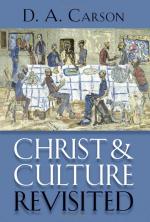
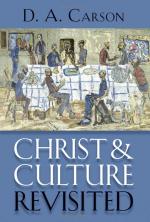
Of course, there is always discussion and debate on this topic, which reflects its importance. Very often, terms like “culture” and “engaging” are not well defined. D.A. Carson’s Christ and Culture Revisited attempts to clarify some of this, as well as contribute to the ongoing discussion regarding cultural engagement. I will be speaking on this topic at the upcoming ACE Conference in Arizona. As a warm-up, Q has kindly published my review of Carson’s work.

Christ & Culture Revisited and Reviewed

My review attempts to address the heart of Christ and Culture Revisited—an alternative, biblical-theological approach to engaging culture. I’m not sure Carson’s approach stands up in practice (is anyone using or equipping on it?), though its is thoroughly biblical-theological. Although the review relies on some of my previous posts on Carson’s work, it expands upon them in an effort to both review Carson and “revisit” the all important topic of Christ and Culture. Consider it a minor contribution to the major topic. Enjoy!


Christ & Culture Revisited

D. A. Carson’s recent contribution to the growing, informed discussion regarding Christ & Culture is a worthy read. However, Christ and Culture Revisited is not without its shortcomings. In a series of posts, I offer a critical reading of Carson’s well-researched book in an attempt to further good thinking and practice on the topic of Christ & Culture.


Should We "Redeem" Culture?

How can we better engage (and disengage) culture in 2009? Much has been written about the extreme Christian postures towards culture–fundamentalist judgmentalism (Christ Against Culture) and emergent syncretism (Christ of Culture)—but is redeeming the culture the biblical middle? D. A. Carson doesn’t seem to think so.

Carson on Culture

D. A. Carson recently cautioned against using “redemption” language when engaging culture. He wrote: “Redemption terminology in the NT is so bound up with Christ’s work for and in the church that to extend it to whatever good we do in the broader world risks a shift in focus.” I love Carson’s commitment to the Bible, and he is correct that redemption terminology is often bound up with Christ’s work for and in the church. However, redemption is also bound up with creation and culture in the New Testament. Apparently, Tim Keller has been affected by Carson’s caution. His comment during a Q&A session at the Dwell Conference revealed sympathy for Carson’s position. Is redeeming culture wrong-headed?  Let’s consider this question from Colossians:

Colossians on Culture

  • “and through him (Jesus) to reconcile to himself all things, whether on earth or in heaven, making peace by the blood of his cross.” Col 1:20

The emphasis of this verse is upon the reconciling work of Christ, a subset of redemption, accompished through Jesus death on the cross. It accomplishes peace, shalom, restoration. The scope of the redemptive, reconciling, shalom promoting effects of the cross are universal. When it comes to people, they are reconciled by faith or by force. When it comes to all other things they are reconciled in fact. That fact is breaking into the present through the Church. All things then, including creation and culture, are affected by the already-not-fully redemptive work of Jesus on the cross. The church is the embodiment of the redemptive gospel to and in the world, which is made plain by the rest of Paul’s letter to the Colossians. The implications of this culture redeeming posture are spelled out in Paul’s ethical exhortations regarding society and vocation. He tells the church to produce counter-cultural, redeemed forms of:

    1. marriage and family, a social institution:
    2. work and slavery, cultural norms and ills
    3. social, economic, and ethnic prejudice and barriers
    4. how we spend our time, a rather sweeping category that applies to everything!
  • “Conduct yourselves wisely toward outsiders, making the best use of (literally “redeeming”) the time.” Colossians 4:; cf. Eph 5:14

Redemptively Engaging Culture

This sweeping command to redeem the time, explicitly through conversations, but implicitly through everything we do warrants redemptive engagement with culture. Perhaps there is something wrong with Carson’s definition of “culture” or maybe we need to clarify what we mean by “redeeming”? Provisionally, I am thinking of gospel-motivated critique and change of cultural forms and content. Nevertheless, the gospel compels us to redemptively engage both peoples and cultures. How? To redeem places—where you gather as a church, where you live in a neighborhood or condo or apartment complex. To redeem cultural products—films you watch, music you listen to, art and advertisement you take in, games you play. To redeem bad political practices—voting for certain propositions, supporting certain policies. To redeem domains like education—to raise the quality of education offered, to promote theological perspectives alongside secular perspectives, to advocate better salaries for teachers.

These are a few ways (here’s more on that) we can redemptively engage culture, which are warranted by Christ on the cross, by Paul from prison, by the Bible as a whole, a document that is, itself, redemptive literature that has affected the writing of novels, short stories, journalism, history, and so on. Should we redeem culture? I think so, but we must be careful not to call the creation of Christian sub-culture redemption of culture; that, of course, is often just bad culture creation and Andy Crouch recently has helped us out with that. I say, redeem, but redeem wisely!


Resources for Wisely Engaging Culture

The issue of how to engage the fuzzy issues of culture came up last night in our Partners Class. How should Xns respond to the so-called ethical “gray areas”? In order of most to least accessible, here are a few resources to help you cultivate cultural discernment:

Articles

Journals/Magazines

Accessible Books

Academic Books


Worldliness

I typically stay away from these kinds of titles—Worldliness—judging the book by its title. However, knowing a bit about the author I decided to crack the cover. C. J. Mahaney did not disappoint; in fact, he stirred me to love Christ not “the world.” This book is sure to ruffle some feathers, and you won’t agree with everything in it, but why just read books that reinforce your opinions and worldview? Consider this excerpt from C.J.’s heart-centered view of worldliness:

David Powlison, paraphrasing John Calvin, wrote, “The evil in our desires often lies not in what we want, but in the fact that we want it too much.”10 It’s difficult to improve upon this insight. The “cravings of sinful man” are legitimate desires that have become false gods we worship. It’s wanting too much the things of this fallen world. A sinful craving is when a legitimate desire for financial success becomes a silent demand for financial success; an interest in clothes and fashion becomes a preoccupation; love of music morphs into an obsession with the hottest band; or the desire to enjoy a good movie becomes a need to see the latest blockbuster.

There may be nothing wrong with these desires in and of themselves; but when they dominate the landscape of our lives, when we must have them or else!-we’ve succumbed to idolatry and worldliness. And as Calvin says, our hearts are a perpetual factory of idols. We’re pumping out these thingson a regular basis.

Preface (by John Piper) and first chapter here.


How to Engage Culture

Those from Austin City Life who are looking for my article related to Sunday’s message, go here for “v.Culture (how to engage culture)


Culture Making

Andy Crouch’s book, Culture Making: Recovering Our Creative Calling, is now available. Andy is an editor for Christianity Today and is a creative, insightful author. I had the privilege of reading an early form of this book, which was very good. Though his thesis is not without critique, his message is one that Evangelicals do well to heed–Create, not just critique, culture. Here is a 40 page excerpt, enjoy!

Tim Keller says: “Culture Making is one of the few books taking the discussion about Christianity and culture to a new level. It is a rare mix of the theoretical and the practical, its definitions are nuanced but not abstract, and it strikes all kinds of fine balances. I highly recommend it.


Revisiting Christ & Culture Revisited (Chp 2 con't)

I have reviewed chapters one and two of Carsons’ Christ and Culture Revisited. Here I will continue to review chapter two and move into chapter three.

Niebuhr Typology vs. Biblical Theology Typology

Chapter two is intended to state the impact Biblical Theology should have on our understanding of Christ and culture, specifically our embrace of Niebuhr’s five-fold typology. In my earlier review I pointed out that Carson seems to misrepresent Niebuhr (certainly not intentionally), making Niebuhr’s categories more water-tight that Niebuhr himself advocates. Carson perceives this as a flaw, that the Niebuhr categories are too restrictive, that they require a more BT reading. Thus, he coins Creation/Fall, Israel/Law, Christ/New Covenant and Heaven/Hell the “non-negotiables of Biblical theology,” whereby we should pass judgment on Niebuhr’s categories (Christ against, of, above, paradox, & transformer of Culture).

Before commenting on Carson, I would like to point out that he seems to set up somewhat of a straw man. Though I can not speak for Niebuhr, I am certain that many who use the Christ and Culture typology do not use just one category in their approach to culture. Instead, most people use two or more of his categories when engaging culture. For instance, there are things in culture that must be clearly rejected, that Christ is against, and there are things that are of value and can be made more value through their transformation, which Christ is for. This is not a new way of thinking about Niebuhr yet Carson comments: “if for any reason we continue to think of different models of the relationship between Christian cultures, we must insist that they are not alternative models that we may choose to accept or reject” (62). So we use all of the categories to chart a path for godly interaction with culture. What Carson is trying to add is a plea for these categories to be chucked for biblical-theological categories. The trouble is that he is rather unclear in his explanation of how we are to proceed in this manner. Yet, I could not agree more that we must submit Niebuhr categories to biblical examination. Let’s check those categories out.

Creation/Fall

In an age that is soft on truth and sin, Carson’s section on the relevance of the Fall for engagement with culture is refreshing. He notes that the heart of evil is idolatry and that all men have fallen under this curse:

The consequences of the fall are universal and devastating because they are first and foremost revolt against the Almighty. We must be reconciled to God, for he is the One who now stands against us not now only our Creator, but our Judge. The drama of the entire storyline of the Bible turns on our persistent alienation from God. (49)

What is the cultural implication?

Christians cannot long think about Christ and culture without reflection the fact that this is God’s world, but that this side of the fall this world is simultaneously resplendent with glory and awash in shame, and that every expression of human culture simultaneously discloses that we are mage in God’s image and shows itself mis-shaped and corroded by human rebellion against God.

Agreed. Sounds like a simultaneous Christ vs. culture and Christ affirmer/transformer of culture. However, Carson continues his BT non-negotiables with very little cultural reflection. They are primary theological summaries of the categories. What we need is practical application to demonstrate sufficient reason to adopt his categories over and against Niehbur.

Christ/New Covenant

After affirming penal, substitiutionary atonement Carson writes: “it is simply non-negotiable for any form of Christianity whatsoever that seeks its shape in the cruciform gospel. Those that contest these fundamentals may receive high marks from the culture, but where there are competing authority claims on this sort of issue, Christians simply cannot afford to take their cues from the culture (55). I would think this is obvious to anyone who reads this book, but it is a rare cultural reflection in the mass of biblical-theological summary.

Heaven/Hell

Carson notes that the already-not-yet-consummated kingdom does not mean we usher in the consummation; that is reserved for Christ and should hold in check any sort of Christian utopian or triumphalism. Yet, again there are few cultural comments to press Carson’s words into the issue of Christ and culture.

Yet, Carson is staunch about his non-negotiables, stating that it will not do to adopt some configuration of a few of the categories and then call it a Christian option. Creation/Fall, Israel/Law, Christ/New Covenant, & Heaven/Hell must all be embraced, and I agree, though I would parse them out a bit differently and make many more connections between the non-negotiables and culture (and I have in some talks I have done on the Gospel and Culture).

Provisional Critique

By way of provisional critique, Chapter Two is in short supply of examples where the BT categories trump the Niebuhr’s, and more importantly, scarce are the sentences that connect the dots between the BT non-negotiable categories and their helpfulness in engaging culture. I am not yet convinced of the need to jump ship from Niebuhr.


Spending for our Worth

Everyone knows that American culture has become a consumer culture. There’s certainly more to American culture, but one of our greatest contributions to the world has been consumerism. Instead of supplying our markets with oil and food, the U.S. has become a net importer of gas and food.[1] What are we then exporting? All kinds of products. Coca-Cola serves a billion people a day worldwide and Hollywood produces 9 out of 10 most watched movies in the world.[2] Domestic markets are saturated with products. We are bombarded with commercials and marketing from cell phones to elevators. And with the help of competitive prices, Craig’s List, and Ebay, we can determine our lifestyle and image—rich and luxurious, hip and urban, or whatever.

With a seemingly infinite array of consumer options, many of us have come to believe that what we buy is what we are worth. Now, we would never say that out loud or put it on our T-shirt but we have come to subtly believe the lie that what we own determines our identity. Many of us live as if acquiring stuff makes us more significant. We spend for our worth, thousands and thousands of dollars on stuff—cars, clothes, gadgets—because we have believed the lie that what we have is determines our worth.

Now, we don’t think this: “If I go buy a new car, even if it’s not the best use of my money, I will be worth more.” But we silently believe it. We believe that the image that the new car, outfit, haircut, or computer creates will give us more meaning, more social acceptance, more individual and cultural worth. In a m word, more “image”. Sure, sometimes it’s just honest shopping. But many times its not. Many of us believe this lie so much that we are willing to rack up ridiculous debt on our credit cards in order to maintain a certain lifestyle and image based on what we own. Ahh, then people around us will look on and accept us…as we continue to spend for our worth.

(quotations taken from David Wells recent ETS journal article)


[1] Clyde Prestowitz, Three Billion New Capitalists, 150-63.

[2] Hunter and Yates, “In the Vanguard of Globalization,” The World of American Globalizers, 324.


Reviewing Christ & Culture Revisited (Chp 2)

My review of the first chapter of Carson’s Christ and Culture Revisited is here. Onto the second chapter…

A Biblical-theological Critique?

I have anticipated this chapter for some time. It is close to 40 pages long, so I will review it in two different posts. The second chapter of CCR explores the promise and critique of Biblical Theology as it pertains to Niebuhr’s Christ and culture paradigm. Carson commends Niebuhr for using Scripture to support his paradigm but also critiques him on the basis of Biblical theology. Carson notes that Niebuhr tends to identify and universalize certain Christ and Culture positions with certain biblical authors. For instance, the Gospel of John and the incarnation become paradigmatic for Christ Transformer of culture (John 1). However, as Carson points out, John’s gospel also advocates other paradigms, such as the Christ against culture (i.e., Jesus as judge of the world). Carson claims that Niebuhr too easily makes biblical authors synonymous with certain Christ and culture positions (41). This claim should be qualified. Niebuhr plainly states that John advocates both Christ transformer and Christ against culture positions in his writings. Niebuhr writes:

They (conversionist motifs) are suggested in the First Letter of John; but are accompanied there by so many references to the darkness, transitoriness, and lovelessness of the world on the one hand, and to the distinction of the new community from the old on the other, that the tendency of this document seems to be toward exclusive Christianity. (196)

When referring to conversionist elements in the gospel of John he calls them “motifs,” which indicates that he is not reducing John’s gospel to a “Christ Transformer of Culture” position. Commenting on the gospel of John he writes: “…it is accompanied there also by a separatist note.” In other words, Niebuhr has room for “conflicting” Christ and culture positions within a single author and single book of the Bible. He is not so “anti-biblical theology” as Carson makes him out to be. Nevertheless, the biblical theology critique will bear more fruit.

And yet here is a real concern. Many who read Carson will not have read Niebuhr nor will they read him, and if you are reading this, read Niebuhr! :) Carson’s summaries and critiques are good but not gold. They fall short and are unfounded in some places. Don’t take my word, Carson’s or Niebuhr’s word; do the hard work of thinking this all through for yourself because your posture towards culture has everything to do with Christ and following Jesus.