Creation Project

Posts Tagged ‘ contextualization ’

Get Better at Contextualization

Contextualization and church planting aren’t anything new. These have been practices of the missional church for centuries. Get better at contextualization by considering the wisdom of our early planting fathers Gregory the Great and his partner Augustine of Canterbury (not St. Augustine of Hippo).


Here.


Churching the Gospel in Your Culture

Tomorrow I will be speaking at the Brazos Valley Church Planters Network in Brenham, Texas. Justin Hyde of Christ Church Brenham was kind enough to invite me. I’ll be speaking on Churching the Gospel in Your Culture. Over the course of two talks, my aim will be to help missional leaders:

  1. To understand the Gospel in light of culture.
  2. To understand Culture in light of the Gospel.
  3. To Church the Gospel in the light and darkness of your culture.

Register Here

Conference 2010 Flyer


The Recent Buzz on Christ & Culture

There’s been a bit of discussion about the relations between Christ and Culture lately, not least Thabiti Anabwyile’s TG4 address on How ‘Wrongly’ Engaging Culture Adjust the Gospel , which Joe Thorn reflected on, and then Tullian’s recent post on Contextualization without Compromise. Add to this the important new work of James Hunter’s, To Change the World (my copy is in the mail), which Justin Taylor kindly digested for us.

Clarifying the Terms

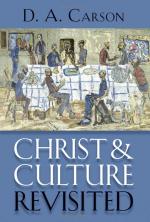
Of course, there is always discussion and debate on this topic, which reflects its importance. Very often, terms like “culture” and “engaging” are not well defined. D.A. Carson’s Christ and Culture Revisited attempts to clarify some of this, as well as contribute to the ongoing discussion regarding cultural engagement. I will be speaking on this topic at the upcoming ACE Conference in Arizona. As a warm-up, Q has kindly published my review of Carson’s work.

Christ & Culture Revisited and Reviewed

My review attempts to address the heart of Christ and Culture Revisited—an alternative, biblical-theological approach to engaging culture. I’m not sure Carson’s approach stands up in practice (is anyone using or equipping on it?), though its is thoroughly biblical-theological. Although the review relies on some of my previous posts on Carson’s work, it expands upon them in an effort to both review Carson and “revisit” the all important topic of Christ and Culture. Consider it a minor contribution to the major topic. Enjoy!


Jesus is Cultural (and so are you)

Culture is everywhere, interwoven in everything, for everyone. Your attire, your values and your behaviors — artifact, assessment and action. Wearing flip-flops is cultural. Driving to work is cultural. Talking on a cell phone is cultural. Going to church is cultural. Covenants are cultural (patterned after Hittite treaties). Your Bible is cultural (a product of Gutenberg’s press). The cross is cultural (Roman torture device).

No one is culturally neutral. We are all enculturated from infancy to grave. To be human is to be cultural, and when Jesus became man, He became cultural. Jesus spoke Aramaic, went to Jewish temples, drank wine, wore sandals and grew a beard. Jesus is cultural and so are you.

Read the rest of this article.


9 Marks Missiology

Okay, so maybe American missions work is driven by the same kind of pragmatism that characterizes so many American churches. Is that really such a big deal? Well, stop and consider the differences between planting pragmatically-driven churches in America versus planting them in most Majority World contexts. Such churches in America have the luxury of building themselves upon the foundations of a culture imbued with several hundred years of Christian influence and ethical norms. Fill a room with nominal Christians, as pragmatically-driven churches do, and you still have a dame that looks half way decent. She’ll dress up alright.

There’s some good thinking in this issue of 9 Marks, though I don’t agree with all of it.


Keller: Gospel-centered Contextualization

In this brief interview, Tim Keller offers some advice on prayer, gospel-centered contextualization, a new writing project, and the new breadth and balance of city centre churches. To get you going, here is his comment on contextualization:

The gospel is the key. If you don’t have a deep grasp on the gospel of grace, you will either over-contextualize because you want so desperately to be liked and popular, or you will under-contextualize because you are self-righteous and proud and so sure you are right about everything. The gospel makes you humble enough to listen and adapt to non-believers, but confident and happy enough that you don’t need their approval.

HT:ES


Beyond Contextualization: Metatheology

Perhaps it is time that missional conversations move beyond contextualization. Renown missiologist Paul Hiebert does just this in his outstanding work, Anthropological Reflections on Missiological Issues. Heibert devotes considerable attention to what he calls metatheology, a word likely coined but not developed by Bosch in his Transforming Mission There has been very little explicit writing on metatheology. And yet, its essence has filled the centuries of church history and flowed from the pens of many a theologian.

So what is or is not, metatheology? The term, “metatheology” could be misleading. It is not, according to Heibert, a transcultural formulation of theological essentials, a kerygma on steroids. Instead, metatheology is methodology, a way to do theology. It refers to the process whereby a Christian can effectively theologize within his or her culture. It is a transcultural paradigm for theologizing that fosters both theological unity and diversity within a broad range of orthodoxy. Hiebert defines metatheology as, “a set of procedures- by which different theologies, each a partial understanding of the truth in a certain context, could be constructed.” Here are some benefits of a possible metatheology:

  • Create a strong theological center in an increasingly destabilized American church. Something more broad than what the Gospel Coalition is doing and more narrow than the World Council of Churches of Lausanne.
  • Rampant growth of Christianity in the 2/3rds world is giving way to syncretism. Metatheology could bring a helpful corrective.
  • Metatheology could foster unity between denominations, networks, and agencies in the mission of the church.
  • May serve to prevent the political and cultural fissure between the Protestant and Roman Catholic Church in promoting unity in the common efforts to relieve the poor and persecuted
  • Could provide criteria for authoritative interpretation that is critical and not relative. This would benefit individuals and churches in determining meaning in texts. It could unite Protestants in orthodoxy and mission.

What separates metatheology from traditional hermeneutics? It’s attempt to provide a universal paradigm for theological unity. Thus, the method is “meta” in that it is intended to indiscriminately enable peoples of all cultures to engage in theological reflection in an honest, self-regulating way that will promote orthodoxy around the world.

So what do you think? Should we advance the metatheology discussion or is it too far reaching? Should we attempt to develop a paradigm of theological unity for the global church, yet again?


Get Better at Contextualization & Mission

Church planting, contextualization, and church planting residencies aren’t anything new. These have been practices of the missional church for centuries, and in comparison to what is passed off as contextualization today, our early planting fathers possessed greater missiological insight than most of us.

Gregory the Great (540-604) was the most influential bishop of the 6th century. Some have argued he was the first Pope, in which case, he would not have been the best bishop, especially given some of this politicization of the faith. All this is debated. Nevertheless, Gregory would have made a great church planter. He was an apostle of sorts, sending missionaries to Briton to ‘make the Angles into Angels”. His choice emissary was Augustine of Canterbury, who with 40 monks, set up mission base at St. Tours. Like many of his Celtic predecessors, Augustine realized the strategic value of having a mission training and sending center among his target people. And I’m willing to bet it was much better than most “church planting residencies” we have today. Here’s a few reasons why.

Augustine implemented great missiology received from Gregory. That missiology, as Tim Tennent has pointed out, can be summarized with three words: Adaptation, Gradualism, and Exchange.

  • Adaptation - To adopt a cultural form for Christian purposes. In Augustine’s case, he adopted heathen temples and turned them into church buildings. Gregory wrote to him: “Detach them from the service of the devil and adapt them for the worship of the true God.” Many Christian leaders and Christians would frown on using a Jehovah’s Witness Kingdom Hall for a church building because their conception of church is so narrowly conceived. Since my first day in Austin, I have been praying that God would give us a male strip joint called La Bare to meet in and do mission from, located the corner of Riverside and Congress. We are currently meeting in a downtown Theatre where we frequently pick up beer bottles off the floor before people arrive. The bathrooms are covered in graffiti and smell terrible, but the aroma of Christ fills the Hideout every week and is slowly changing that part of the city. This isn’t about being cool; its about adopting Austin’s cultural forms, creating common cultural space for non-Christians, and using these forms for Christ-honoring purposes.
  • Gradualism - Implement Christian ideals slowly recognizing that individuals are undergoing and entire worldview shift. Don’t expect radical holiness from your new converts. If they have embraced Christ but still smoke pot or occasionally drink too much, don’t beat them up for their behaviors. Instead, shepherd their hearts, lead them into the gospel, and allow their inner joy to transform their outer joys. Gregory wrote: “If we allow them these outward joys, then we are more likely to find their way to the true inner joy… It is doubtless to cut off all abuses at once from rough hearts, just as a man who sets out to climb a high mountain does not advance by leaps and bounds, but goes upward step by step and pace by pace.”
  • Exchange - The creation of an entirely new cultural form in exchange for an existing idolatrous one. It is one thing to use pagan temples for church buildings, it is quite another to participate in pagan sacrifices. For instance, if your people consistently go to happy hours to get wasted and have a social life, create a more God-honoring context for socializing. Gregory wrote: “People must learn to slay their cattle not in honour of the devil, but in honour of God and for their own food…” We need to work creating more social spaces for our people to exchange sinful social spaces with holy social spaces.


Metaphors for Missional Community

Joe Thorn has posted on his metaphors for missional community. Using a Circle, Inverted Triangle, and a Square, he describes the three areas of church ministry as:

  • The Table – domestic ministry
  • The Pulpit -liturgic ministry
  • The Square – civic ministry (HT:SM)

Kevin Rush has formulated a similar paradigm using the metaphors of Towel, Table, & Text:

  • The Table
  • The Text
  • The Towel

I use the metaphor of a house with it’s respective entrances to designate pathways in and out of the community of faith:

  • Side Door – gospel motivated relationships
  • Front Door -gospel messages from the pulpit
  • Front Yard -gospel activity in the city


Macarthur is Contextualized

Here is a copy of my quick response to the Macarthur excerpt:

Macarthur is out of his league here. Some his statements are just naive. He clearly hasn’t understood the difference between contextualization and syncretism, but what’s more is that he has neglected the ultimate paradigm of contextualization–the Incarnation. An excerpt from my article on Missional Discipleship:

When the Father sent the Son, Jesus left the glory of his trinitarian abode and became a helpless infant in the care of humans he created. This required an accommodating humility. Jesus grew up and became a first century, toga-wearing, sandal-sporting, temple-frequenting Jew. He accommodated first century Jewish culture (also known as contextualization). So, within reason we should take on the trappings of our culture in order to contextually relate the gospel. This can entail wearing broken-in jeans, togas, hand-made sandals or a suit and tie.

Everyone is contextualized; all truth is expressed in cultural forms. The Bible is contextualized…Hittite treaties, Greek epistles, vice and virtue lists, sea stories…Macarthur is contextualized…

However, contextualization is not purely cultural; it is missional. It leads us to immerse ourselves into the humanity of our neighborhoods and cities in order relate the gospel to people and their needs. Being a local missionary requires more than relevant attire; it demands humility of heart to listen to the stories of others, to empathize with their frustration, suffering, and brokenness and to redemptively retell their stories through the gospel. To be sent by God is to follow the example of the incarnation, to redemptively engage others with a humble heart and cultural accommodation.